PRESS RELEASE
LAGOS OEQA SEEKS GLOBAL BEST PRACTICES TO STRENGTHEN EDUCATION QUALITY ASSURANCE, IMPROVE LEARNING OUTCOMES
… Proposes school-based evaluation, digital monitoring, professional certification and stronger stakeholder partnerships
The Lagos State Government through the Lagos State Office of Education Quality Assurance (OEQA), has reaffirmed its commitment to strengthening education quality assurance through a technology-driven, evidence-based and results-oriented system designed to improve teaching effectiveness and learning outcomes across public and private schools.
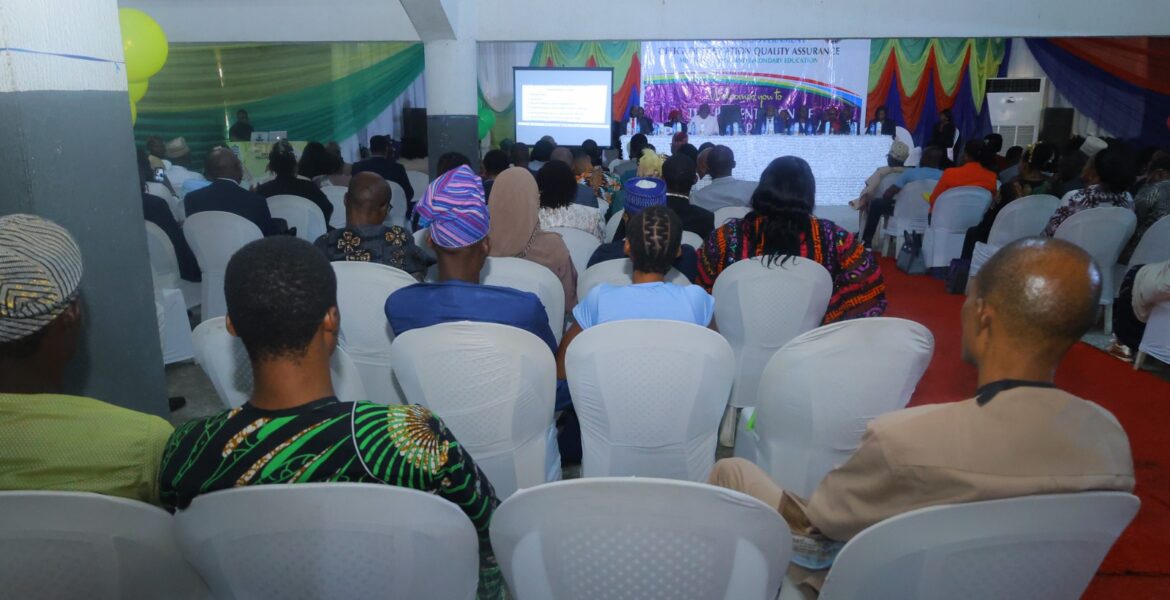
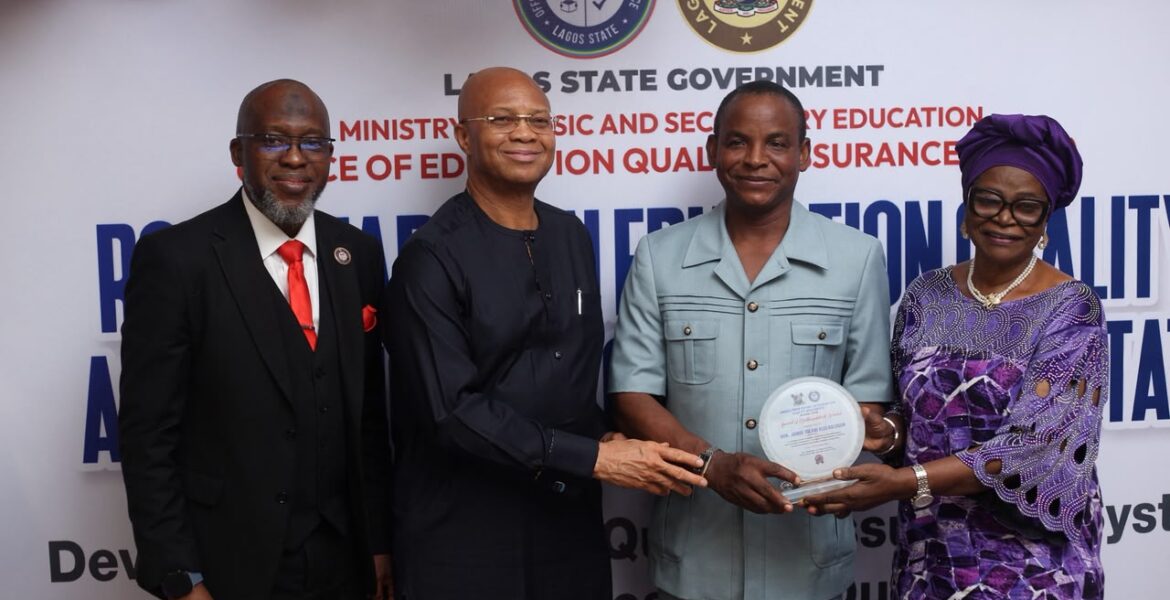
The commitment was reiterated by the Commissioner for Basic and Secondary Education, Mr. Jamiu Tolani Alli-Balogun, at a Roundtable on Education Quality Assurance organised by OEQA, at Protea Hotel, Ikeja.
The event, themed “Adopting Global Best Practice in Transforming Education Quality Assurance in Lagos State,” with the sub-theme “Developing Efficient Quality Assurance System for Improved Learning Outcomes in Lagos State,” was organized to gather stakeholders feedback on improving standard of education in Lagos State.
Declaring the roundtable open, Alli-Balogun described the theme as timely, noting that the engagement would encourage critical discussions and generate practical ideas for strengthening quality assurance across the state. He emphasised the need for an integrated approach to school evaluation, professional support, institutional accountability and technology adoption.
The Commissioner stressed that quality assurance must extend beyond routine inspections and report generation to ensure that evaluation findings translate into targeted interventions and measurable improvements in learners’ performance.
He also welcomed the participation of technical partners from Finland, urging stakeholders to adapt relevant international best practices to the realities and specific needs of Lagos State.
The Commissioner expressed confidence that the roundtable would produce actionable recommendations, measurable performance indicators and an implementation roadmap outlining institutional responsibilities, priority interventions and mechanisms for tracking progress.
He reaffirmed the state government’s commitment to ensuring that every learner receives quality teaching, acquires relevant knowledge and skills, and has the opportunity to succeed, irrespective of school type or location.
Delivering the keynote lecture, the immediate past Director-General of the Budget Office of the Federation, Mr. Ben Akabueze, observed that the true measure of an education system lies not merely in enrolment figures or the provision of infrastructure, but in the quality of learning experienced by every child.
Akabueze noted that despite progress in expanding access to education, disparities persist in the availability of learning resources, textbooks, science laboratories and teacher support, particularly between public and private schools.
He advocated a proactive, developmental and data-driven quality assurance framework anchored on clear performance standards, regular school self-evaluation, continuous teacher professional development, reliable educational data and technology-enabled monitoring.
He also identified the establishment of OEQA as one of the important milestones in the state’s efforts to institutionalise educational quality improvement, whilst calling for stronger collaboration among government agencies, school leaders, teachers, parents, development partners and the private sector, emphasising that sustainable progress requires shared responsibility and sustained investment.
Contributing to the discussions, the Tutor-General/Permanent Secretary, Education District I, Dr. (Mrs.) Idowu Olufunke Oyetola, advocated clearer standards for public and private schools, improved feedback and follow-up mechanisms, leadership development and certification for school principals, school-cluster mentoring, reliable data dashboards and greater community participation.
She further emphasised the need to safeguard learners, improve school infrastructure, promote inclusive learning environments and ensure that the needs of children with disabilities are adequately considered in school planning and approval processes.
The Director-General of OEQA, Dr. Sulaimon Ogunmuyiwa, in his presentation outlined the agency’s mandate through the acronym REMI : Regulate, Evaluate, Monitor and Improve. He explained that quality assurance should support schools in identifying strengths, addressing weaknesses and pursuing continuous improvement rather than being perceived as a punitive or fault-finding exercise.
Ogunmuyiwa who identified shortage of evaluators as an important area that should be addressed towards for effective quality assurance, listed other challenges to include; manual documentation, inconsistent data management, inadequate staffing, limited professional certification for quality assurance officers and insufficient coordination among education stakeholders.
To address these gaps, the Director-General presented seven reform priorities for consideration at the roundtable. Key proposals included strengthening school-based quality assurance through trained vice-principals, introducing annual school self-evaluation and improvement plans, expanding the agency’s operational presence across the state’s 57 Local Government Areas and Local Council Development Areas, and advancing a Non-State School Policy to address different forms of non-state education provision.
He also proposed establishing an education quality assurance laboratory to support the assessment of learners, teachers and schools, alongside enhanced partnerships and professional development initiatives to improve the effectiveness of quality assurance activities.
Earlier in her welcome address, the Director, Planning, Research and Statistics, OEQA, Mrs. Evelyn Ibukun Pelemo, described the theme as timely and significant to Lagos State’s pursuit of excellence, economic prosperity and global competitiveness.
Mrs. Pelemo stated that OEQA’s responsibility extends beyond identifying gaps in schools to providing constructive feedback, supporting teachers and school leaders, and ensuring every learner has the opportunity to succeed.
Pelemo noted that an efficient quality assurance system must be built on clear standards, reliable data, professional competence, transparent processes and sustained commitment to improvement.
She stressed that the goal is not to replicate foreign systems, but to adapt proven global principles to the Lagos context to develop sustainable solutions.
In a goodwill message, the Group Head, Education Finance, Sterling Bank, Mrs. Yonodu Okeugo, who represented the bank’s Chief Executive Officer, highlighted private-sector contributions to education, including support for teachers, students and schools through educational solutions and technology-enabled learning tools.
She reiterated the importance of sustained investment in education as a foundation for national development.
The roundtable was attended by education policymakers, school owners, professional associations, education district representatives, development partners and other stakeholders who examined existing quality assurance practices and explored practical approaches to strengthening the state’s education system.
The engagement underscores Lagos State’s commitment to building a quality assurance framework that promotes accountability, supports school improvement, strengthens teaching and delivers better learning outcomes for all learners.
Adepeju Adeyemi
Director, Public Affairs, OEQA
20 -October -2026